By Andrea McKenna
•
November 24, 2026
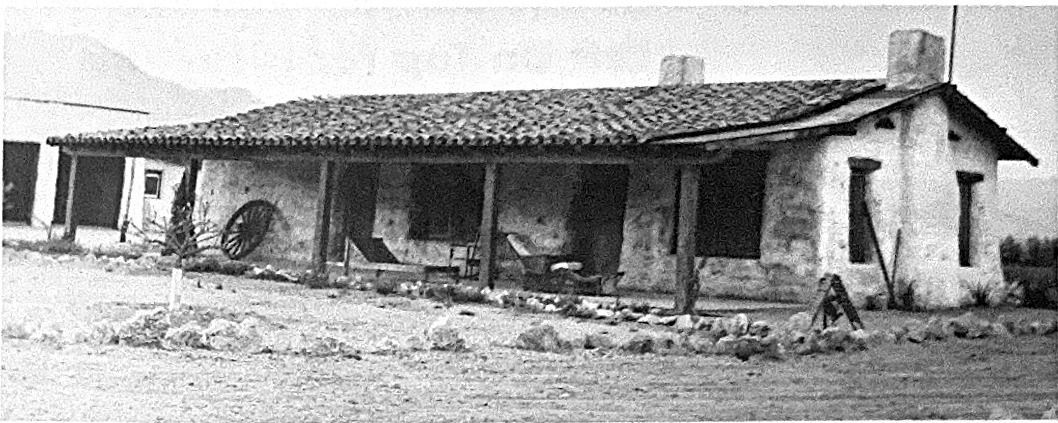
From an unfinished adobe ranch house to a wartime gathering place, one of Borrego Springs’ best-known resorts has roots dating back to the 1930s. When Noel Crickmer and his wife opened The Desert Lodge in 1939, Borrego Springs had a population of about 25 people. By Thanksgiving Day, the couple was serving turkey dinner to 17 guests. What would eventually become La Casa del Zorro was then a modest desert retreat with its own milk cow, an unreliable power supply and a growing reputation among San Diego visitors. In the summer of 1971, Lois von Voigtlander recorded Crickmer's memories of the lodge and life in early Borrego. From Burks Ranch to The Desert Lodge The original adobe ranch house was built by Dana Burks, an early developer of Palm Springs who became interested in the Borrego Valley through local developer Harry Woods. Constructed with a mixture of adobe, oil and cement, the building had walls approximately two feet thick and rested on rock foundations. The Crickmers first visited Borrego in 1936. At the time, Noel managed the Del Mar Hotel. In 1939, they purchased the unfinished Burks Ranch, naming it The Desert Lodge with plans to operate during the winter and travel during the summer. Preparing the property for guests required considerable work. Additional accommodations and bathrooms were built, and the couple gradually established a functioning desert lodge. Life in Early Borrego Running a lodge in those days required resourcefulness. A cow named Bessie supplied milk, cream and butter from 1939 through 1946, while three acres of alfalfa were irrigated on the property. Crickmer remembered a small but active community that included the DuValls, who operated the Borego Store, Tommy Davis, Al Mathis, Keith Ritchie, Bud Henry, Dr. and Mrs. Church, and Doc and Frances Beatty. Agriculture was already taking hold in the valley. Ensign Ranch produced alfalfa and dates, Fred Lanz grew tomatoes in Tub Canyon, Rancho de Anza grew grapes in Coyote Canyon, and Bringer Ranch produced grapefruit and figs. Even the decision to improve access to Borrego was a community affair. Residents voted at the old Borego Store on whether to develop Yaqui Pass Road or rebuild the road over San Felipe. Yaqui Pass won. World War II Changes Everything Following Pearl Harbor in December 1941, the lodge’s staff left, anticipating a decline in business. Instead, Army and Marine units arrived to train in the desert, bringing an unexpected demand for accommodations. Ensign Ranch became a military training site, with as many as 2,000 troops training at one time. The Desert Lodge, designed to accommodate no more than 18 guests, began housing 30 to 40 people, including military wives who wanted to remain near their husbands. On one occasion, Crickmer and a guest slept on kitchen chairs after giving up their beds to military wives. Food rationing complicated daily operations. Mrs. Crickmer baked bread three times a day, while local ranchers and merchants helped supply food. Ensign Ranch kept approximately 25 milk cows and raised as many as 4,000 turkeys at a time. To conserve fuel, the lodge turned off its lights at 10 p.m. Guests who stayed up later relied on candles and kerosene lamps. A Changing Borrego Valley As the war drew to a close, interest in Borrego increased. Farmers, real estate agents and prospective residents began arriving, and the desert landscape started changing. The Crickmers preferred to keep their grounds natural. After an unsuccessful attempt to maintain a lawn, they planted a vegetable garden and created a living ocotillo fence. In 1946, an additional wing was built onto the ranch house, creating a guest patio surrounded by a native stone fence. The couple also subdivided a portion of their property, naming it Rancho Borrego. Becoming La Casa del Zorro In 1947, Di Giorgio Corporation leased The Desert Lodge for six months to accommodate workers while its own facilities were being completed. The original ranch house served as a dining hall. The Crickmers eventually decided to sell the lodge to A.A. Burnand Jr., whose family continued operating the property. In 1960, James S. Copley purchased The Desert Lodge and renamed it La Casa del Zorro. When the Borrego Sun revisited the property in 1971, the original adobe ranch house was still incorporated into the main building, housing the lobby and bar. The old engine room and apartment also remained part of the resort. In little more than three decades, an unfinished adobe ranch house had become a year-round resort, with its history intertwined with the growth of Borrego Springs itself.